
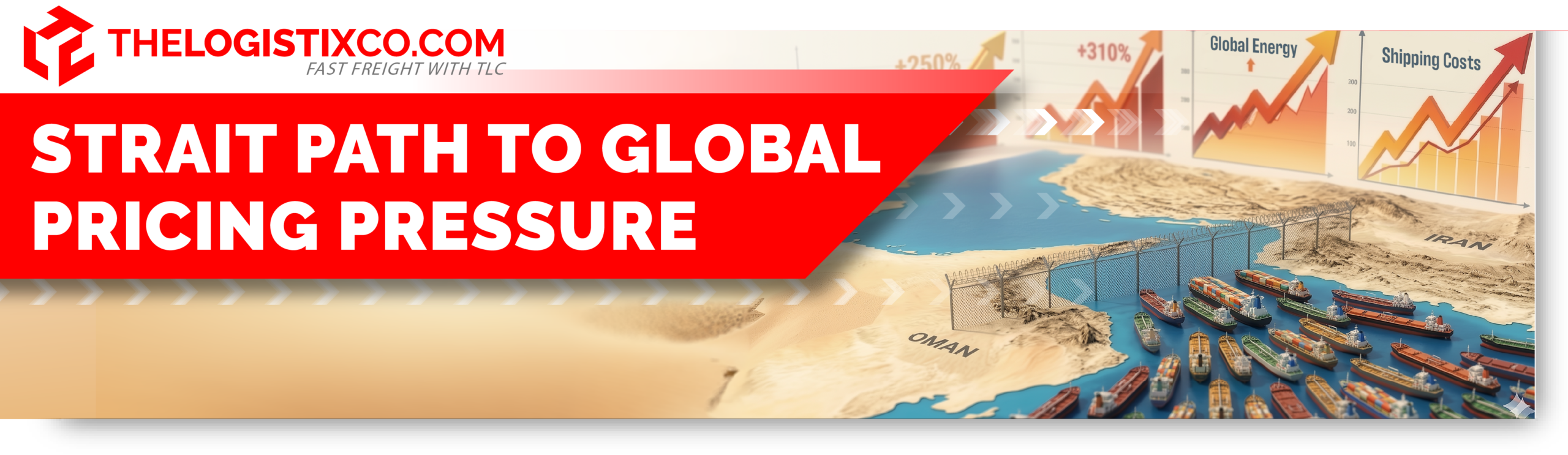
Strait Path to Global Pricing Pressure
Manufacturers are preparing for broader cost pressure as the continued closure of the Strait of Hormuz disrupts one of the world’s most important energy corridors. According to the source material, roughly 30% of global seaborne oil trade and 20% of liquid natural gas trade have been affected since the Iran war began, with knock-on impacts across petrochemicals, fertilizer inputs, and aluminum. Crude oil prices are up 47% this month, polypropylene has climbed 24%, and aluminum is up 10%, creating new headwinds for transportation, plastics, and industrial production.
The pressure is moving beyond raw materials. Longer transit times, tighter capacity, and higher freight costs are beginning to ripple through automotive, chemicals, machinery, food and beverage, and electronics supply chains. Analysts warn that packaging, medical supplies, and other petrochemical-dependent goods could also become more expensive as manufacturers absorb short-term shocks before passing costs downstream.
At TLC, we are closely tracking lane volatility, input cost pressure, and routing shifts tied to the region. In moments like this, steady planning matters. Customers reviewing exposure, capacity options, and supplier flexibility can reach out to keep freight decisions sharp, timely, and on track.
Click here to read the full article.
